FPI Exodus 2026: Why Foreign Investors Pulled Out ₹1 Lakh Crore - And What It Means for Your Portfolio
The "Sell-India" trade has returned with a vengeance. In what is shaping up to be one of the most significant capital reversals since the 2008 financial crisis, Foreign Portfolio Investors (FPIs) have pulled out a staggering ₹1 Lakh Crore from Indian equity markets in 2026.
The exodus, which accelerated sharply in the first quarter of the calendar year, has wiped out all gains from the post-2024 election rally, leaving the Nifty 50 teetering on the edge of correction territory. For retail investors who have grown accustomed to "buying the dip," this sudden flight of foreign capital raises a critical question: Is this a temporary storm, or a structural shift?
Here is a breakdown of why the foreigners are fleeing and how you should navigate the volatility.
Part 1: The Numbers Behind the Panic
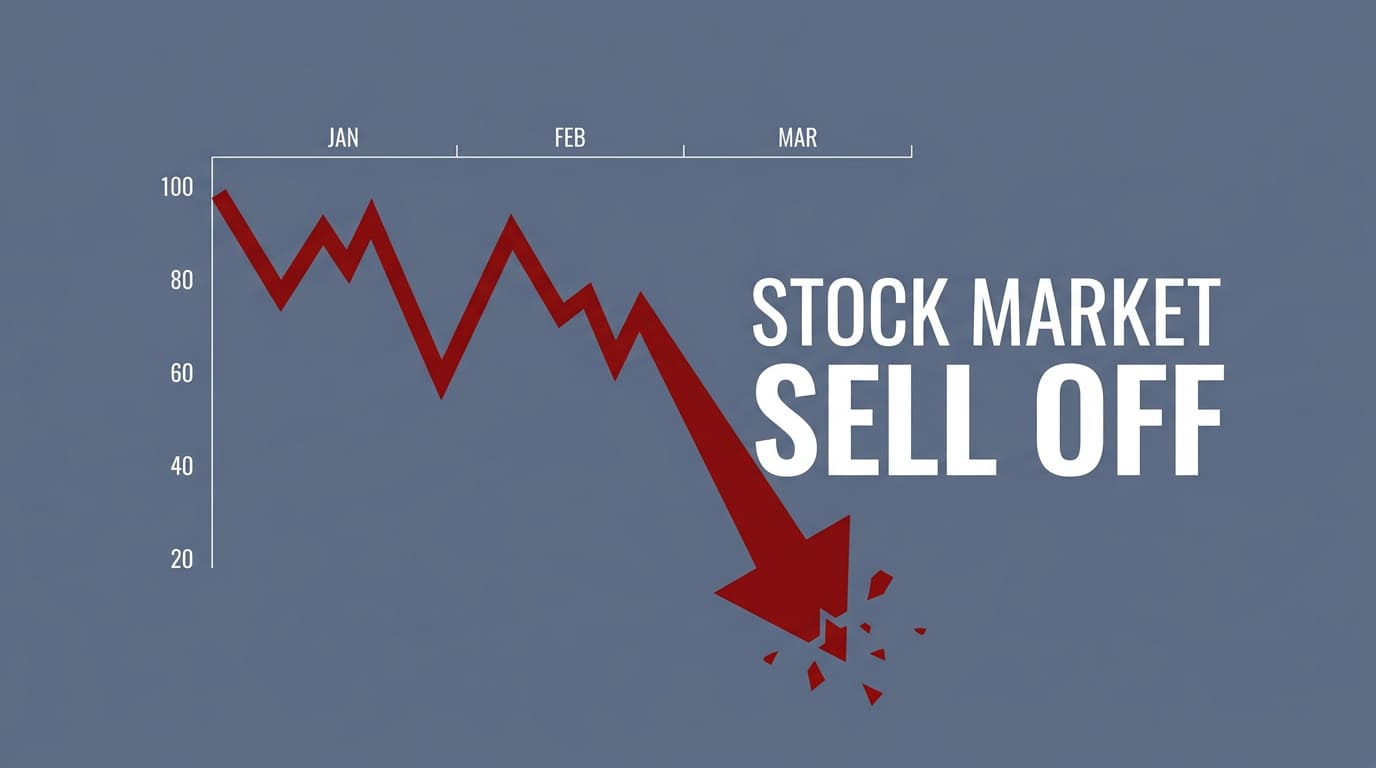
To understand the gravity of the situation, we must look at the velocity of the outflows. As of March 2026, net FPI outflows have crossed ₹1,05,000 crore ($12.5 billion).
-
January 2026: ₹65,000 crore outflow (the worst monthly sell-off since June 2022).
-
February 2026: ₹25,000 crore outflow (moderation, but persistent selling).
-
March 2026 (YTD): ₹15,000 crore+ outflow.
The selling has been broad-based. While Financials and IT have borne the brunt of the selling due to high liquidity, even defensive sectors like FMCG and Pharma have seen marginal outflows as global funds engage in a wholesale "risk-off" deleveraging.
Part 2: Why the Exodus? The Four Horsemen of the 2026 Sell-Off
FPIs are not exiting because they hate India; they are exiting because the relative risk-reward equation has shifted dramatically. Four key factors are driving this trend:
1. The "Japanization" of China & The Valuation Gap
The single biggest factor in early 2026 has been the resurgence of Chinese equities. Following unprecedented stimulus measures from Beijing aimed at combating deflation and stabilizing the property market, Chinese stocks (specifically the Hang Seng Tech Index) have delivered over 25% returns YTD.
The FPI Calculus: India was trading at a price-to-earnings (P/E) ratio of nearly 24x (well above its long-term average), while China was trading at a steep discount of 10x. For global fund managers who benchmark against emerging market (EM) indices, the trade was simple: Sell overvalued India, buy undervalued China.
2. The "Higher for Longer" Rate Regime
Contrary to market expectations at the end of 2025, the US Federal Reserve has maintained a hawkish stance. With the US 10-year Treasury yield flirting with 5.5% and the dollar index (DXY) surging to 108, the carry trade has reversed.
For FPIs, the hedging cost for rupee investments has skyrocketed. When you can earn a nearly risk-free 5.5% in US Treasuries, the 2-3% earnings yield advantage in Indian equities (adjusted for currency depreciation) evaporates.
3. Earnings Growth Fatigue
The Indian corporate earnings story, which was the bedrock of the bull run, has hit a speed bump. The December 2025 quarter results revealed the slowest profit growth in 18 months, driven by urban demand slowdown and margin compression in manufacturing.
FPIs are forward-looking. With the domestic consumption story showing signs of stress (urban unemployment creeping up and sluggish wage growth), the premium valuations are no longer justifiable.
4. The Rupee Depreciation Spiral
The Indian Rupee (INR) has breached the ₹88 per USD mark in 2026. For foreign investors, a depreciating currency erodes returns. Fearing further depreciation (with the RBI intervening but unable to stem the tide completely), FPIs are repatriating capital to avoid getting "stuck" in a weakening currency environment.
Part 3: What It Means for Your Portfolio
If you are a retail investor watching your portfolio bleed red, it is easy to panic. However, it is crucial to understand that FPI flows are not the only game in town anymore. The dynamics of the Indian market have changed fundamentally since 2020.
The Rise of the Domestic "Colossus"
The biggest structural change in India is the rise of Domestic Institutional Investors (DIIs)—namely Mutual Funds, Insurance companies, and the Employees' Provident Fund Organization (EPFO).
In 2026, DIIs have been net buyers, absorbing nearly 80% of the FPI selling. Systematic Investment Plans (SIPs) continue to see record inflows, hovering around ₹25,000 crore per month. This "wall of domestic money" is acting as a shock absorber, preventing a free fall in the markets.
Winners and Losers in the Exodus
-
Losers: Large-cap index heavyweights that are heavily owned by foreign funds (such as HDFC Bank, ICICI Bank, and Reliance) are underperforming.
-
Winners: Small and Mid-caps, driven by domestic retail and DII flows, have shown relative resilience. However, pockets of froth remain.
-
Safe Havens: Sectors with low FPI ownership and strong domestic tailwinds (like defense, railways, and manufacturing linked to the Production Linked Incentive (PLI) schemes) are still attracting capital.
Part 4: Strategic Moves for Investors
In times of FPI exodus, capital preservation is key, but so is opportunity. Here is how you should approach the current market:
1. Do Not Fight the Fed (or the Dollar)
Until the US Dollar shows signs of peaking and US bond yields cool off, the FPI selling pressure is likely to persist. Trying to "catch the falling knife" in expensive large-caps that are FPI favorites is risky. Accumulate gradually via SIPs rather than lump sums.
2. Focus on "Domestic-Facing" Sectors
Given that DIIs are the marginal buyers, your portfolio should align with their preferences. Look for sectors where foreign ownership is low but domestic demand is structural:
-
Manufacturing & Industrials: Beneficiaries of the China+1 supply chain shift.
-
Rural Consumption: With expectations of a normal monsoon and government spending on infrastructure, rural demand is poised for a recovery.
-
Financials (Selective): While FPIs are selling, PSU banks and select private lenders with strong deposit franchises are trading at reasonable valuations.
3. The Gold Hedge
Historically, when FPIs flee equities and the rupee weakens, gold performs well. Sovereign Gold Bonds (SGBs) or Gold ETFs provide a hedge against the currency depreciation and equity market volatility that defines an FPI exodus.
4. Reassess "Overvalued" Hype Stocks
The FPI exit is acting as a reality check. Stocks that were trading at 50-60x earnings based on future promises without current earnings visibility are the most vulnerable. This is the time to prune your portfolio of speculative bets and pivot towards companies with strong balance sheets and free cash flow.
The Bottom Line
The ₹1 Lakh Crore FPI exodus is a classic case of "reversion to the mean." India’s premium valuations were a bet on uninterrupted earnings growth. With global liquidity tightening and a competing market (China) offering bargains, foreign money is rotating out.
However, this is not 2013 (the "Taper Tantrum"). India is no longer dependent on "Fickle Foreign Capital" to keep its markets afloat. The domestic savings army—via mutual funds and insurance—is larger, more resilient, and continues to buy.
For your portfolio: Use this correction to shift from a high-valuation, momentum-based strategy to a value-oriented, domestically-focused strategy. The long-term India story remains intact, but the path over the next 12 months will be defined by volatility, stock-specific performance, and a diminishing role for foreign capital in setting price trends.
Disclaimer: This article is for informational purposes only and does not constitute investment advice. Always consult with a certified financial advisor before making investment decisions.
Related Articles
10 Nifty500 stocks with up to 60% upside potential; do you own any?
Several Nifty500 stocks may deliver strong returns over the next year, with analyst estimates indica...
Read More → MarketsExplained: Why RBI’s FCNR(B) and ECB swap window could be a game changer for banks
RBI’s FCNR(B) and ECB swap windows aim to boost liquidity, stabilise the rupee and ease funding co...
Read More → MarketsVedanta demerger & HFCL dip: Anand James reveals how to trade this week's top stock triggers
Also, 23700 is a stiff barrier that had troubled May for several days, and is expected to pose a sti...
Read More → MarketsCEA Anantha Nageswaran says AI stock valuations definitely in a bubble
India's Chief Economic Advisor V Anantha Nageswaran warns that artificial intelligence stock valuati...
Read More →